Bedrock Wiki
  • Discord
  • Contribute
  • bedrock.dev
  • MS Learn
Beginner's Guide
  • Guide
    • 1. Introduction
      guide
    • 2. Add-Ons Explained
    • 3. Software & Preparation
    • 4. Project Setup
    • 5. Create a Custom Item
    • 6. Create a Custom Entity
    • 7. Blockbench: Modeling, Texturing & Animating
    • 8. Adding Loot Tables, Spawn Rules & Crafting Recipes
  • Extra
    • a. Understanding JSON
    • b. Download Example Packs
    • c. Troubleshooting
      help
    • d. Advanced Manifest
    • e. Format Versions
    • f. Project Setup Android
Animation Controllers
  • Intro to Animation Controllers
    guide
  • Entity Commands
  • AFK Detector
  • Death Commands
  • Molang into Scoreboard
  • Respawn Commands
Blocks
  • General
    • Intro to Blocks
      guide
    • Block Components
    • Block Tags
    • Block States
    • Block Traits
    • Block Permutations
    • Block Events
      Scripts
    • Block Event Migration
      help
    • Blocks as Items
    • Multi-Blocks
    • Troubleshooting Blocks
      help
  • Sound & Visuals
    • Intro to Block Visuals
      guide
    • Block Culling
    • Block Models
      guide
    • Block Sounds
    • Block Texture Animation
    • Block Texture Variation
    • Block Tinting
  • Tutorials
    • Applying Effects
      Scripts
    • Avoiding State Limit
    • Block Orientation
    • Fake Blocks
      Scripts
    • Intercardinal Orientation
      Scripts
    • Ore Loot Tables
      Scripts
    • Tool-Based Destruction
  • Vanilla Re-Creations
    • Custom Crops
      Scripts
    • Custom Glass
    • Custom Glazed Terracotta
    • Custom Heads
      Scripts
    • Custom Trapdoors
      Scripts
  • Documentation
    • Block Co-Location
    • Block Format History
    • Block Shapes
    • Redstone Components
    • Vanilla Block Models
    • Vanilla Block Sounds
    • Vanilla Block Tags
    • Vanilla Voxel Shapes
Commands
  • General
    • Intro to Command Blocks
    • Understanding Selectors
    • Functions
      guide
    • Block States
    • Coordinate System
    • Giving NBT Items
    • Scoreboard Operations
  • Commands
    • Damage
    • Execute
    • Playanimation
    • Playsound
  • On Event Systems
    • On First World Load
      function
    • On Player First Join
    • On Player Join
    • On Player Leave
    • On Player Death
    • On Player Respawn
  • Scoreboard Systems
    • Entity Counter
    • Scoreboard Timers
    • Comparing And Retrieving Scores
  • Detection Systems
    • Look Detection
    • Item Drop Detection
    • Movement Detections
    • Rain Detection
  • Techniques
    • Execute Logic Gates
      concept
    • Execute at Block Variant
    • Execution Forking
      concept
    • Binary in Commands
      concept
    • MBE - Max's Block Entity
    • FMBE - A New Way to Create Display Entities
    • Dynamic Displays
    • Orbital Camera
  • Useful Creations
    • Sphere Command
    • Compass Display
    • Custom Crafting
    • Multiplayer Position Rearrangement
      function
Concepts
  • contents.json
  • Molang
  • Namespaces
  • Overwriting Assets
  • Shaders
  • Sounds
  • Subpacks
  • Texture Atlases
  • textures_list.json
Documentation
  • Advanced Molang
  • File Types
  • Fog IDs
  • Material Configuration Description
  • Molang Queries
  • Pack Folder Structure
  • Shared Constructs
  • Sound Definitions
  • Vanilla Materials
Entities
  • General
    • Intro to Entities BP
      guide
    • Intro to Entities RP
      guide
    • Troubleshooting Entities
      help
    • Entity Events
    • Entity Properties
    • NPC Dialogue
    • Render Controllers
    • Spawn Rules
  • Tutorials
    • Area Effect Clouds
    • Coordinate Space Conversion
    • Creating Boats
    • Detecting Other Entities
    • Disabling Team Damage
    • Dummy Entities
    • Entity Attacks
    • Entity Movement
    • Entity Timers
    • Holding Items
    • Invulnerable Entities
    • Look at Entity
    • Riding Flying Entities
    • Sleeping Entities
    • Solid Entities
    • Spawning Tamed Entities
      Scripts
    • Village Mechanic
  • Documentation
    • Dummy Components
    • Non-Mob Runtime Identifiers
    • Projectiles
    • Runtime Identifiers
    • Vanilla Usage Components
    • Vanilla Usage Spawn Rules
Items
  • General
    • Intro to Items
      guide
    • Item Components
    • Item Tags
    • Item Events
      Scripts
    • Item Event Migration
      help
    • Item Catalog
    • Troubleshooting Items
      help
  • Tutorials
    • Equipment-Based Commands
    • Spawning Items
    • Throwable Items
  • Vanilla Re-Creations
    • Custom Armor
    • Custom Food
      Scripts
    • Custom Pottery Sherds
    • Custom Weapons
  • Documentation
    • Enchantments
    • Attachables
    • Item Format History
    • Numerical Item IDs
    • Vanilla Item Groups
    • Vanilla Item Tags
    • Vanilla Usage Components
JSON UI
  • General
    • Intro to JSON UI
      guide
    • Best Practices
      guide
  • Tutorials
    • Adding HUD Elements
    • Aseprite Animations
    • Buttons and Toggles
    • Modifying Server Forms
    • Preserve Title Texts
    • String to Number
  • Documentation
    • JSON UI Documentation
Loot, Recipes & Trading
  • General
    • Trading Behavior
  • Documentation
    • Loot Tables
    • Trade Tables
    • Recipes
    • Item Functions
  • Tutorials
    • Randomized Structure Loot
Meta
  • Add-On Performance
  • Style Guide
  • Useful Links
  • Using Schemas
  • Version Control
  • Q&A
    • Blocks and Items Q&A 2024/08/30
    • Deferred Technical Preview Q&A 2024/02/23
    • GameTest Q&A 2021/08/06
    • Scripting and Editor Q&A 2023/09/22
    • World Generation Q&A 2024/11/15
NBT
  • General
    • .mcstructure
  • Tutorials
    • Enabling Experiments by Editing NBT
    • Extending Structure Limits
  • NBT in Depth
    • About NBT (Named Binary Tag)
    • NBT Libraries
    • Reading NBT Example
Particles
  • General
    • Intro to Particles
      guide
  • Tutorials
    • Disabling Particles
  • Documentation
    • Vanilla Particles
Scripting
  • General
    • Intro to Scripting
    • What is Script API?
    • API Modules
  • Tutorials
    • Script Core Features
    • Block Placement Prevention
    • Custom Commands
    • GameTests
    • Script Privileges
    • Script Requests API
    • Server Forms
  • Documentation
    • Engine Environment
    • Script Resources
    • Script Watchdog
    • Troubleshooting JavaScript
    • TypeScript
Servers
  • Software
    • Bedrock Server Software
  • Protocols
    • Bedrock Protocol
    • NetherNet Protocol
    • RakNet Protocol
Text & Localization
  • General
    • Intro to Text & Localization
    • Raw Text
    • Splashes
  • Emojis & Symbols
    • Fonts
    • Intro to Emojis
    • Custom Emojis
    • Input Keys
Visuals
  • General
    • Introduction to Entity Visuals
      guide
    • Bedrock Modeling
    • Custom Death Animations
    • Effects in Animations
    • Material Creations
    • Materials
    • Math-Based Animations
    • Skin Packs
  • Tutorials
    • Entity Texture Animation
    • Glowing Entity Texture
    • Hurt Animations
    • Leash Position
    • Player Geometry
    • Remove Entity Shadows
    • Retexturing Spawn Eggs
  • Ideas
    • Structure Presentation
World Generation
  • General
    • Intro to World Generation
      guide
    • Biomes
      guide
    • Feature Types
    • Jigsaw Structures
  • Tutorials
    • Block Conditions for Features
    • Generating Custom Ores
    • Generating Custom Structures
    • Generating Patches
    • Heightmap Noise
  • Documentation
    • Biome Tags

Block Co-Location

intermediate
Block Co-Location
  • What Are Co-Located Blocks?
  • Waterlogging
    • Creating Waterloggable Blocks
    • Allowing Water Flow
  • Snowlogging
    • Creating Snowloggable Blocks

What Are Co-Located Blocks? ​

While each block location in the world is typically limited to only containing one block, there are some situations where a single location can contain two blocks instead. This includes waterlogging and snowlogging functionality which allows water or snow to occupy the same space as another block.

To support this, each block location in the world is stored as two separate "layers" of blocks:

  • A primary block that represents the main block at the position.
    • This is the block that can be interacted with and is the only block that can be accessed by most APIs.
  • An optional secondary (or "extra") block that can be used to store a second block at the same position.
    • This block is generally inaccessible using APIs, excluding the block placement filter which is able to detect it.

Waterlogging ​
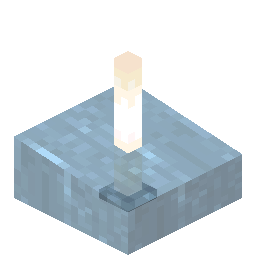
An end rod submerged in water

A block is waterlogged when it contains either a source or flowing block of water.

When a block is waterlogged:

  • The primary block remains unchanged.
    • Unless the block has its own interaction functionality, an empty bucket can be used to pick up the contained water source when the block is selected.
  • The secondary block is water (either a source or flowing water).
    • Items that are liquid clipped can be used to interact with liquids that are on the secondary block layer.
    • This allows blocks that can only be placed on water (such as lily pads) to be placed on waterlogged blocks.

Creating Waterloggable Blocks ​

The liquid detection component can be used to allow a block to contain water. By default, water is not able to flow through waterloggable blocks and will instead flow around.

minecraft:blockcomponents
json
"minecraft:liquid_detection": {
    "detection_rules": [
        {
            "liquid_type": "water",
            "can_contain_liquid": true
        }
    ]
}
1
2
3
4
5
6
7
8

Allowing Water Flow ​

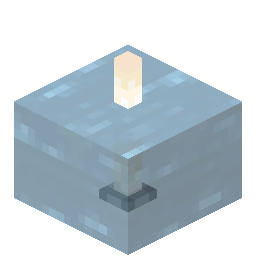
An end rod with water flowing through it

Some waterloggable blocks also allow water to flow into the block as if it were air. This can be seen in vanilla drip leaves, end rods, tripwires and tripwire hooks.

To apply this functionality to your own block, simply set the on_liquid_touches parameter to "no_reaction".

minecraft:blockcomponents
json
"minecraft:liquid_detection": {
    "detection_rules": [
        {
            "liquid_type": "water",
            "can_contain_liquid": true,
            "on_liquid_touches": "no_reaction" // Allows water to flow through the block
        }
    ]
}
1
2
3
4
5
6
7
8
9

Snowlogging ​

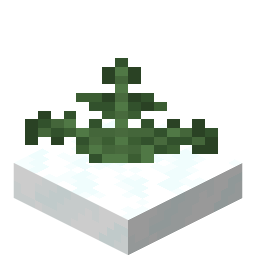
A fern submerged in snow

A block is snowlogged when it is submerged in snow.

When a block is snowlogged:

  • The primary block becomes the placed snow layer.
    • This prevents the block that has been snowlogged from being interacted with without first destroying the snow.
    • Despite the selection visually being the shape of the snow layer, the actual selectable region also includes the shape of the submerged block.
    • Unlike snow layers that do not contain a submerged block, this snow layer will have a covered_bit state of true.
  • The secondary block is set to the previous primary block that was snowlogged.
    • This prevents most APIs from detecting the block that has been snowlogged.
    • This breaks any leads that are attached to a leashable snowlogged block.
    • Each time a block moves between the primary and secondary layers, the onPlace() custom component hook is called.

Creating Snowloggable Blocks ​

EXPERIMENTAL 1.26.30

Snowlogging for custom blocks requires the "Upcoming Creator Features" toggle to be enabled in order to function.

The precipitation interactions component can be used to allow a block to be submerged in snow layers. Note that snowloggable blocks cannot have a collision box as the secondary block layer does not support collision.

minecraft:blockcomponents
json
"minecraft:collision_box": false,
"minecraft:precipitation_interactions": {
    "precipitation_behavior": "snowlogging"
}
1
2
3
4

Contributors

Edit Block Co-Location on GitHub

Text and image content on this page is licensed under the Creative Commons Attribution 4.0 International License

Code samples on this page are licensed under the MIT License

Bedrock Wiki by Bedrock OSS

"Minecraft" is a trademark of Mojang AB.

Bedrock OSS, Bedrock Wiki and bedrock.dev are not affiliated in any way with Microsoft or Mojang AB.

  • Privacy Policy
  • Join our Discord
  • Learn how to Contribute
  • Visit our Repository